New McLaren Artura brings electric dreams to luxury sports cars

When you consider that the term ‘hybrid’ is one of those words I used to spit out with distaste, like alcohol-free beer, it comes as something of a shock to hear me admit that two of my favorite cars in the world, at present, are not just hybrids, but plug-in ones.

And one of them is still the greatest single car I’ve ever driven, despite the fact that, when piloted in its pure EV mode, it makes no sound at all. I know, it’s hard to believe.

Fear not the scourge of Toyota’s Prius and RAV4, however, because I’m talking about hybrids that use this technology for excitement rather than dullness.

Cars like the absurdly awesome Ferrari 296 GTB and the newly arrived McLaren Artura that combine the low-down, instantaneous torque punch of electric motors with the soaring, songful and soon-to-be-obsolete glory of combustion engines.

Indeed, while driving the astonishing new Artura around Sydney Motorsport Park, intermittently coughing, gurgling and giggling with a combination of pleasant pain and genuine surprise, it struck me that we are truly living through a golden age of motoring, or more specifically, supercar driving.

Soon enough, all supercars will be all electric and silent. But for now we can hear them roar one last time.

These super hybrids are forming a bridge – I’m thinking something like the Golden Gate, that kind of impressive – between the power plants of tomorrow and the beloved noisy fossil fuel burners of today and yesterday.

Soon enough, all supercars will be all-electric and silent. But for now we can hear them roar one last time, and yet feel them accelerate like no cars that have come before them.

I asked the Chief Engineer for the McLaren Artura, Geoff Grose, about this idea and he excitedly agreed.

“We don’t need to worry about full electrification when it comes, because it will deliver amazing performance, and the cars will be light enough, because that’s the big challenge for electrification, the weight of the batteries and the effect that has on performance,” Grose explains.

“You can get astonishing performance in an EV up to 40 miles per hour [64 kilometers per hour], but then it can feel quite different. That’s why we’re combining the two technologies in the Artura – a turbo engine and an e-motor – and we’re trying to make the two things work well in this car.

“We do see hybrid as being the dominant powertrain out to the end of the decade, because we don’t believe EV technology is mature enough to deliver a full EV supercar that would be true to the DNA of our brand, which is about exhilaration, engagement and light weight.”
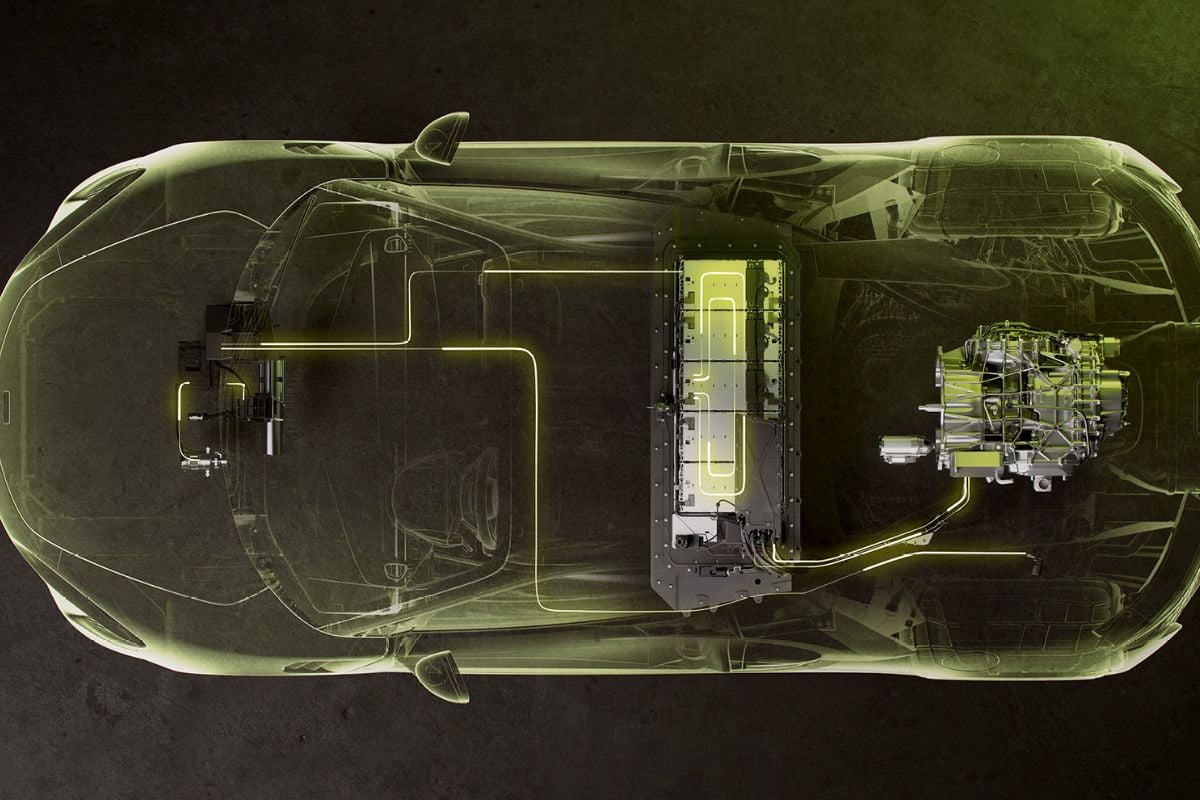
McLaren Artura


Plenty of excitement

Exhilaration is certainly in plentiful supply in the new Artura, particularly if you’re fortunate enough to drive it around a race track.

While it might come as a shock to hear that a supercar can be powered by a V6 engine rather than the full eight cylinders McLaren has always used before, the 3.0-litre six it has come up with for the Artura is truly special, with a throaty, belligerent note and a whopping 500 kilowatts on offer.

When its soaring, roaring power is combined with the vehicle’s e-motor (good for 220 newton meters on its own), you get combined torque of 720 newton meters. McLaren calls the result of mixing the two power sources together ‘torque infill’, which sounds nowhere near as exciting as it feels.

The sensation of speed is equally impressive as you punch down the straight.

Essentially, in Race mode, when everything is firing at once, the electric motor kicks in first, because it can provide 100 percent of torque from zero, while at the same time the turbos are winding up to their full effect, punching in to provide absolutely ferocious mid-range and top-end madness.

The shove you feel out of corners, particularly in second gear, is something akin to a large rugby player attacking the base of your spine while making shouty engine noises.

The sensation of speed is equally impressive as you punch down the straight, the 200-kilometer-per-hour mark disappearing before you’re even halfway down the length of Sydney Motorsport Park (zero to 200 kilometers per hour takes just 8.3 seconds for the Artura, while zero to 100 snaps up in just under three seconds).

I saw a slightly alarming 265 kilometers per hour before hurling the McLaren into Turn One at one stage, and I’m still slightly surprised I didn’t collapse of heart failure at that point.
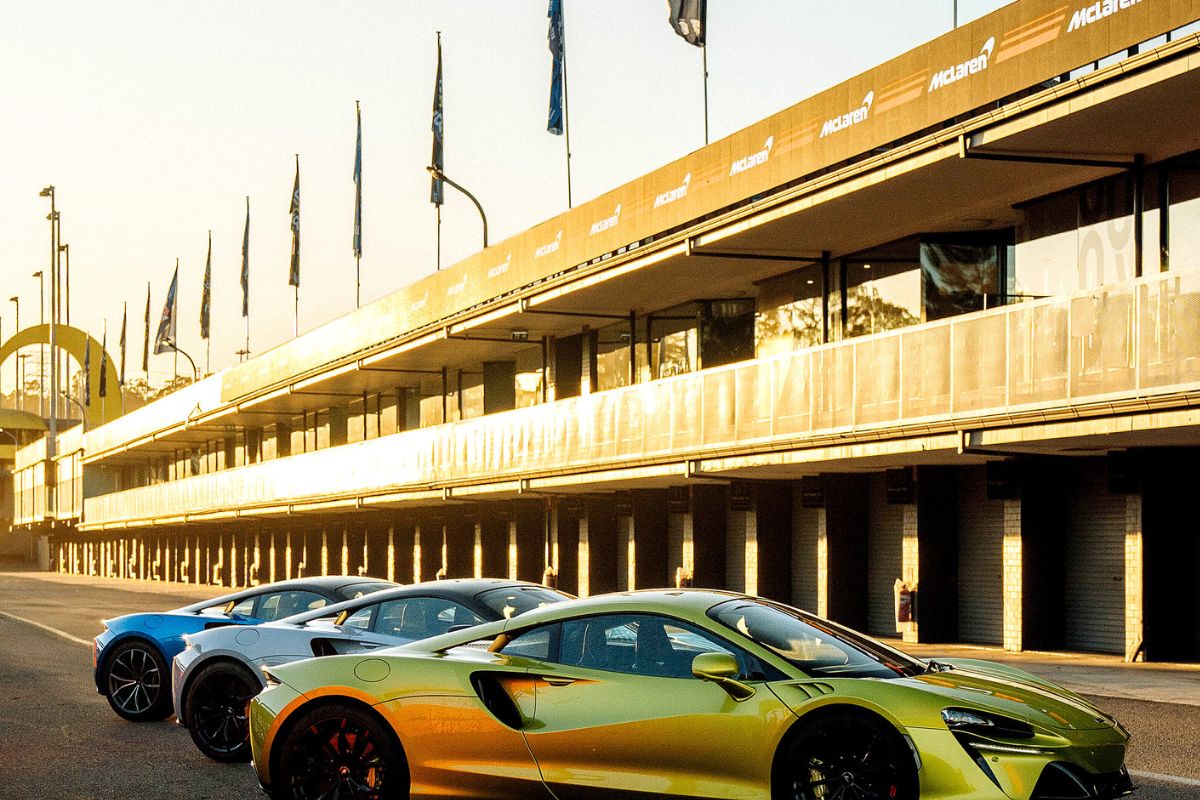
McLaren Artura

Keeping weight down

Despite having to add the complexity and weight of a battery and a hybrid system, McLaren has managed to keep the Artura light – at just 1,395 kilograms – and gifted it a short, sharp wheelbase as well. This helps the largely carbon fiber vehicle to feel incredibly pointy through bends, a sensation aided by sharp, race-car-like steering.

The way the front end grabs the road when you pound its huge carbon ceramic brakes provides a sense of absolute confidence and grip through corners of all kinds.

Because it’s a hybrid, you can drive it in EV-only silent-running mode at speeds of up to 130 kilometers per hour, but seriously, is anyone buying a US$300,000 McLaren supercar to do that? I think not.

While some previous McLarens have been a bit too quiet to be considered classic supercars, the Artura is gloriously loud when you want it to be.

Nor do I buy the suggestion that they’ll be the kind of people who turn their noisy engines off and glide around in electric mode late at night or first thing in the morning so as not to annoy their neighbors.

In case you’re wondering, you can get around 30 kilometers of EV running before the petrol power has to kick in to help.

While some previous McLarens have been a bit too quiet to be considered classic supercars, the Artura is gloriously loud when you want it to be, and supple and sensible enough to be driven on public roads when you don’t have a track at your disposal.

Perhaps its only failing is that it’s not as visually splendid as certain Italian competitors, which is partly the reason that Ferrari’s 296 GTB, with its similar V6 hybrid setup, remains my favorite vehicle of all time.

But I am absolutely sure I would be more than happy to live with a McLaren Artura for the rest of my life, and even more so when the fully electric supercars arrive and this thing becomes a properly mad museum piece.

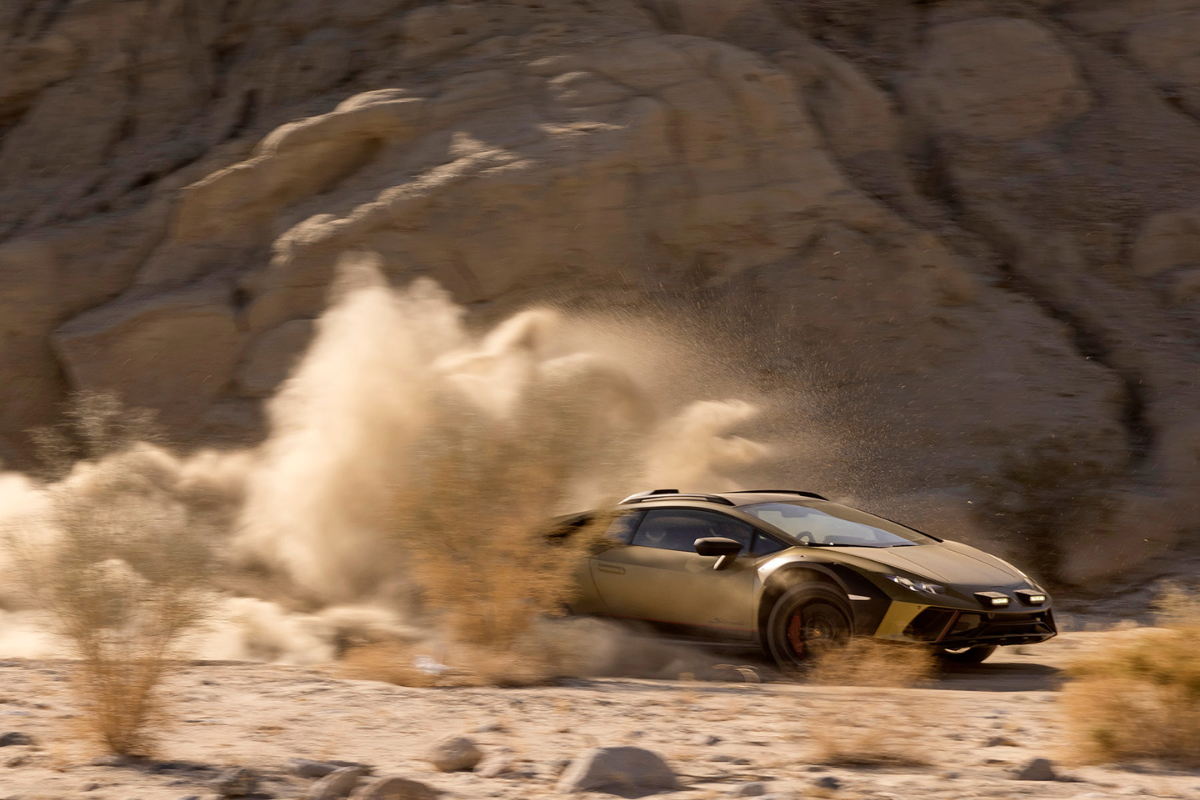
Lamborghini’s new Huracan Sterrato is the first off-road-capable super car

On any normal day I might have been more alarmed about the fact that the YouTuber next to me in the driver’s seat of the Lamborghini was driving at 150 kilometers an hour with one hand, and taking videos on his phone with the other, all while shouting in a language I didn’t understand.

I mean, I certainly didn’t think it was particularly safe behavior, but at the same time, he had earlier explained to me that he has seven million subscribers and he owns several super cars himself as a result, so perhaps I had much to learn from him.

Frankly, though, I was too busy being terrified to be merely scared of his behavior because the destination we were driving toward was Chuckwallah Raceway, outside Palm Springs, California, where we would be asked to drive this new and entirely unprecedented Lamborghini Huracan Sterrato on a special stage that was half perfectly smooth racetrack and half sand, dirt, gravel and dust carved into long S-bends, chicanes and fast corners.

I have driven many Huracans before and never, not even once, has it occurred to me to think, “Wow, you know what would be fun and wise? Taking this hugely powerful, V10-engined super car and driving it on dirt.”

And yet that’s exactly the kind of thought process that occurs when you gather a bunch of Lamborghini engineers – all of whom, being Italian, are brilliant, brave drivers. The Sterrato, the last-ever and most unforeseen variant of the hugely successful Huracan, was conceived while the Lamborghini Urus SUV was being tested and evaluated in off-road conditions.

It probably started as a joke: “Wouldn’t it be hilarious to make a butch-looking Huracan with big knobby tires and rally lights, and design it to be driven on dirt, like the world’s most bonkers rally car?” And at any other car company, it would have been just that.

Limited run

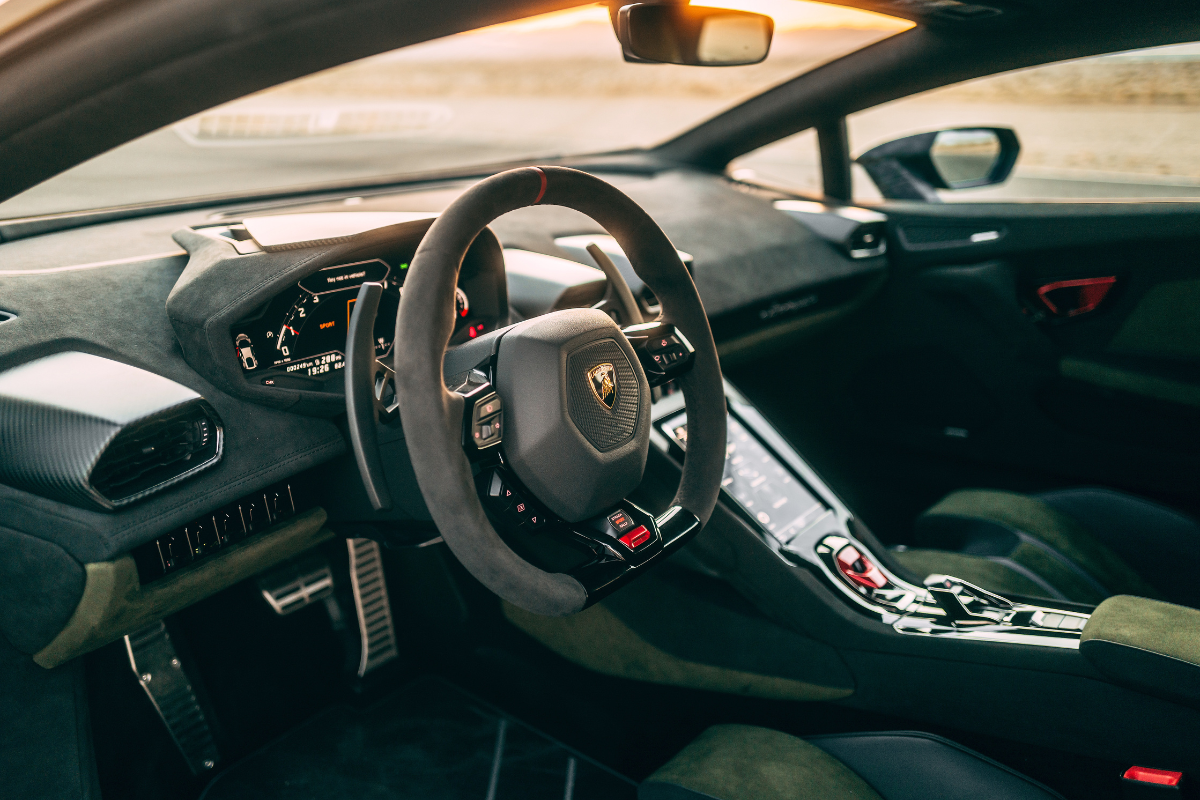
Huracan Sterrato

However, Lamborghini is built on making machines that don’t have to make sense; they just have to make you smile and grunt in appreciation when you look at them, and then make their owners feel special.

No matter how the business case for the world’s first all-terrain super car was argued, it turned out to be correct. Initially supposed to be a limited run of just 963 cars, overwhelming demand saw that extended to 1,499.

There are plenty of people, it seems, who think they are good enough to handle a V10-engined car with 449 kilowatts and 560 newton-meters on dirt, but I have to say I’m not one of them.

I can see that, on paper, Lamborghini has done everything it can to prepare the Sterrato for this task: raising the ground clearance by 44 millimiters, blocking up the air vents on its sides so that the engine doesn’t choke on dust (this meant attaching a giant air scoop to the roof and detuning the engine slightly so that it now only has a top speed of 260 kilometers an hour) and, most vitally, asking Bridgestone to develop a tire unlike anything the world has ever seen.

Lamborghini is built on making machines that don’t have to make sense.

The Bridgestone Dueler All-Terrain AT002 has to cope with all kinds of rough-road conditions and yet also be able to provide super car levels of grip on race circuits and public roads.

And because there’s no room for a spare, they have to be run flats, so that if you do get a puncture while thrashing your Sterrato over sharp rocks, you won’t be stranded. The tires offer up to 80 kilometers once they’ve been compromised.

What’s truly incredible about these tires is that, against all odds, they are both quiet and smooth in road driving. Indeed, thanks to the higher sidewall, and combined with the increased suspension travel that the Sterrato has to use, this Huracan rides far more comfortably than any version before it.

Throw in the extra ride height and driving it around town is actually very practical, for a Lamborghini, with the one counterpoint being that the addition of that giant roof scoop along the car’s spine means that you can no longer see a single thing out of the rearview mirror.

Hitting the track

Huracan Sterrato

Having enjoyed the road drive section of the Sterrato launch program, aside from the parts where I was in the passenger seat, I was genuinely alarmed when they showed us a video of the course we were about to drive.

The dirt sections seemed to involve being completely sideways at all times, and while I might fancy my chances of holding such magnificent drifts in, say, a Mazda MX-5 or a Toyota GR86, the idea of doing so in a crazily powerful super car seemed simply fantastical.

My unnaturally calm driving instructor assured me that everyone else had been nervous too, and that I should stop worrying and attempt to get my hands to cease shaking.

And then we were off, flying through the first few sealed-surface bends before launching on to the dirt rallying stage, where the Sterrato seemed to be sliding savagely sideways before I’d even had the time to consider how to make it do so.

It was beyond any kind of driving skill I’ve achieved before and genuinely felt like a rally driving video game made real.

Incredibly, I genuinely found the gravel and sand sections more fun than the race circuit, although obviously I was going far slower. Somehow I felt like I could suddenly drive like a rally hero, hurling the Huracan from side to side, holding lurid slides, flicking it through slippery chicanes and holding drifts using the throttle.

It was beyond any kind of driving skill I’ve achieved before and genuinely felt like a rally driving video game made real.

I cornered one of the top geniuses behind this astonishing machine, CTO Rouven Mohr, to ask what had just happened and how Lamborghini had made it possible. Essentially, this Sterrato has the sharpest, fastest and hardest-working traction and torque-vectoring systems the world has ever seen. Officially it’s called LDVI (Lamborghini Dinamica Veicolo Integrata), but Mohr, more accurately, calls it “the hero maker”.

Essentially it is monitoring all of your inputs and sensors all over the car that measure drift angles, yaw rates, wheel spin and even driver intention to make sure the car is always going where you want it to, as well as saving you from yourself should you get too ham-fisted.

It really did make me feel like a hero, and I know for sure that with the traction systems turned off I would not have been able to get around that track without facing the wrong way several times.

It’s fair to say, then, that this last Huracan is the best of all; certainly it’s my favorite and the one I most want to own. Sadly, all 1,499 have already been snapped up at US$503,949. I’d like to tell all 1,499 of those lucky owners that they’re in for a hell of a ride.